
Warming Winter, Springtime Sizzle, See Ya Snow
Thousands of temperature records are shattered and weather whiplash is everywhere

After the winter that wasn’t, residents of the west are bracing for the after effects of a fast-melting snowpack brought on by scorching early spring heat. The lack of snow, record high temperatures and early, rapid snowmelt are creating the perfect conditions for a summer of water rationing and an endless wildfire season.
Later this autumn comes the Super El Nino. With a fossil-fuel run administration in power and another oil war raging in the Middle East, humans continue to terraform the planet into a Hothouse Earth. Grab the popcorn. It is going to be a show.
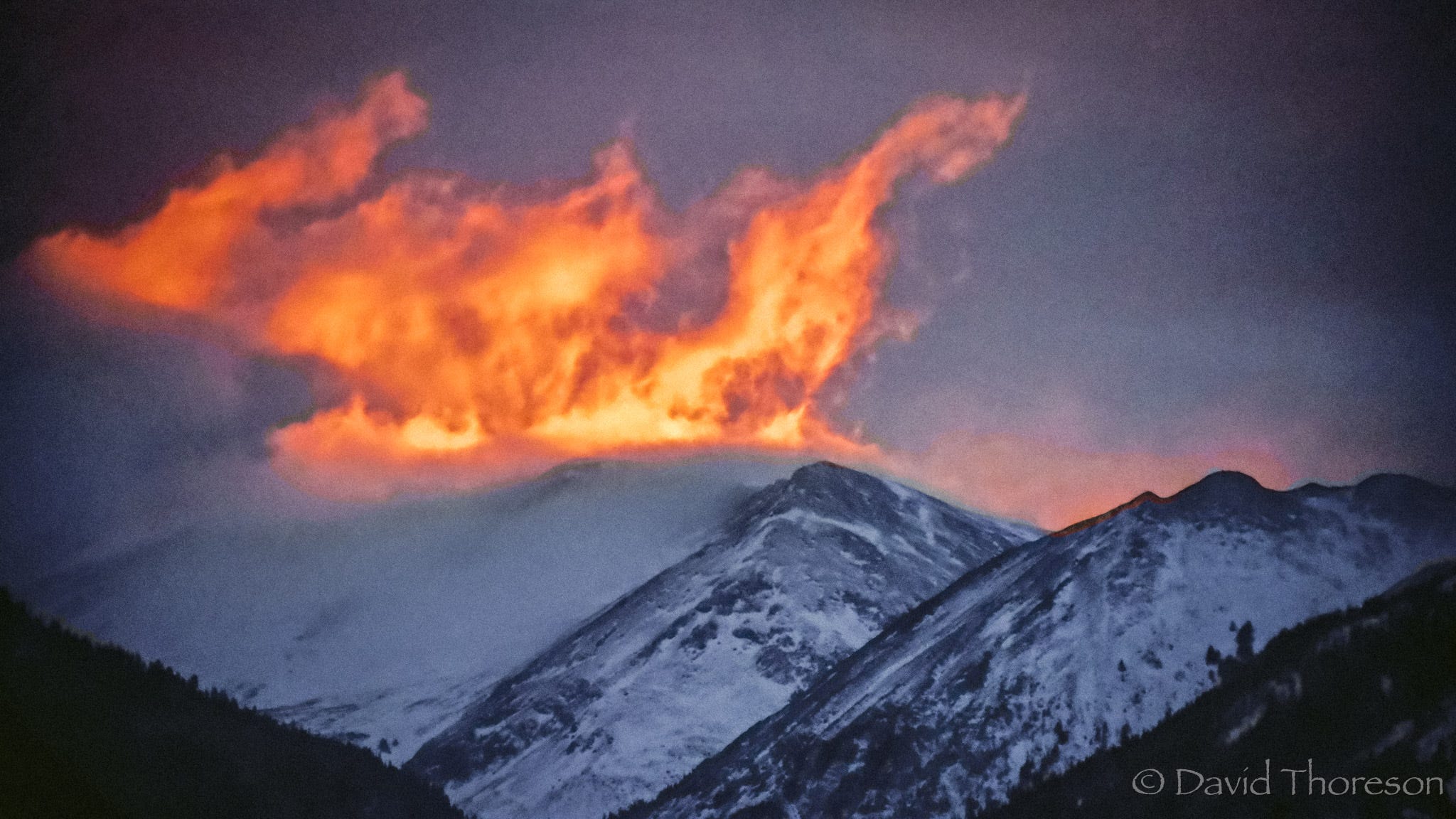
What has transpired should hardly be a surprise. The signals have been there, well before the start of the winter season. Warm temperatures in the west and and dry weather created perfect conditions to limit snowfall in the Rockies during the start of the December holiday. The winter ski season never materialized and the all important freshwater “snowpack” hovered at a record low all season.
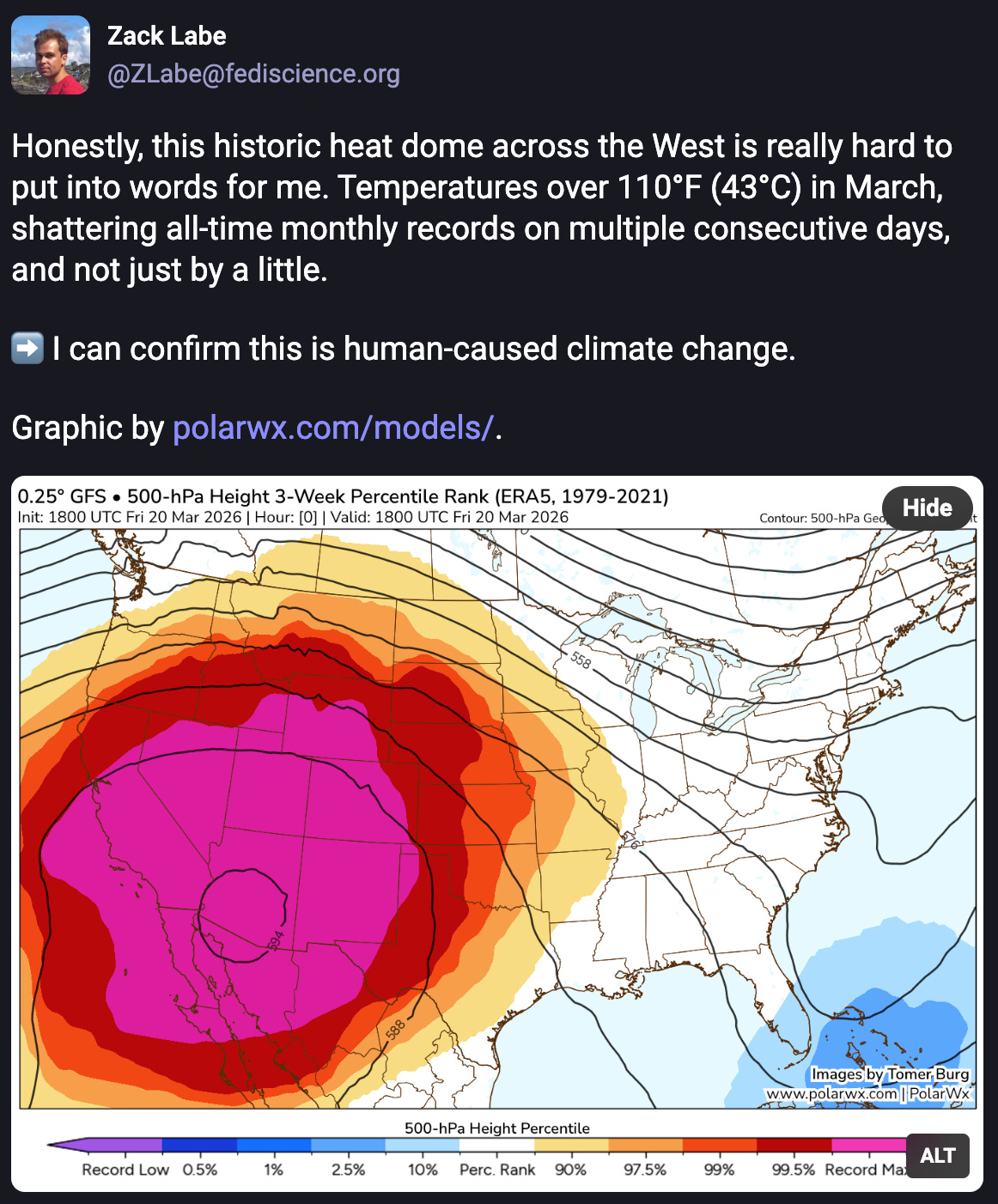
Then immediately came the March heat dome. What started in Southern California and the desert southwest slowing spread east shattering thousands of temperature records along the way. For all the gory details, please check out my great colleague’s post, by Chris Gloninger, Weathering Climate Change. HEAT WAVE
For decades, climate scientists have predicted these “future” events which would occur but could not conclude how much a changing climate was contributing to any single weather event. More recently however, researchers have been using a new “attribution science” which quantifies the climate impacts on real-time weather events. For more on attribution science visit here- SCIENCE
Scientists have calculated that human-caused climate warming has added 4° C (over 7° F) to the recent extreme temperatures making the likelihood of dangerous heat event much more likely in the future. The same scientists also state that the March 2026 heat wave “would have been virtually impossible” in a pre‑industrial climate. Once rare 500-year events appear to be baked into the near future.
We also know the consequences. The West is in deep trouble with no end in sight.
According to Climate Central, a leading climate communication organization, “As of March 30, 2026, the snow water equivalent for the western U.S. was the lowest on record for April 1, when it’s usually near the annual peak. The amount of water stored in western U.S. snowpack is currently 65% below the 1991-2020 normal — the lowest by far since 1981.” Link- SNOW DROUGHT
Zack Labe is a brilliant young climate scientist and a friend of mine who also works at Climate Central. Earlier in the year, he was fired from his “dream job” as a climate scientist for NOAA in the historic DOGE purge. Zack was also a guest on our Three Degrees Podcast where he told his fascinating story. CLIMATE COMMs
Recently, Labe commented on not only the loss of snowpack but the abnormal record heat wave which followed the warm winter in the west.
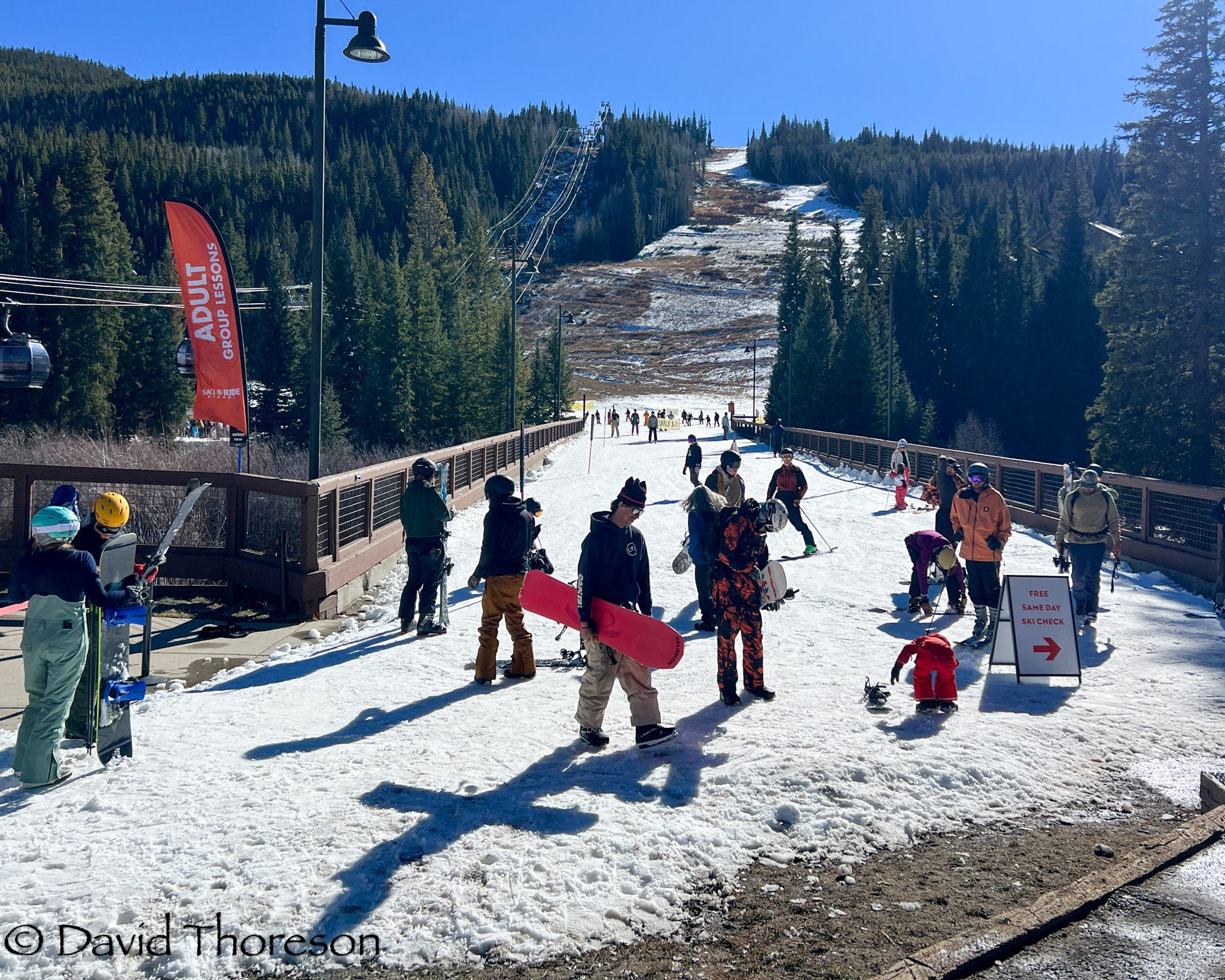
During the winter of 2025-26, the multi-billion dollar US Ski Industry finally met climate reality and saw their first glimpse of an altered future with little snow.
The ski industry is in denial however as illustrated by Vail Corporation, the $5 Billion behemoth which operates more than forty ski resorts worldwide. They cannot even mention the word “climate” and often describe their dire financial situation as due to “challenging weather changes” or just “tough weather conditions” in the Rockies.
“This has been the most challenging winter across the Rockies that we have ever experienced,” said Vail CEO Rob Katz to the Wall Street Journal. I would suggest this is the understatement of the year. “Catastrophic” would be a much better word for Vail and the new reality facing the majority of the western United States.
Ski resorts in general are pretty respectable with their own sustainability and community efforts locally, but that’s where it stops. They have been small and ineffective as a whole. Collectively they are part of the $1.3 Trillion GDP generated by the outdoor recreational economy. And this economic sector has the most to lose as climate warming impacts snow pack in the western mountains.
And what do you hear from the snowsports industry about the dangers of climate disruption to their business plans? Crickets. How about proposing more effective policy positions and solutions to act on climate? Nothing. At a time when bold industry-wide action is needed, courage is a rare commodity. And so it goes.
My wife and I live (part-time) high in the Colorado Rocky Mountains at 9300 feet in Summit County, home to four premier ski resorts. Summit County has the highest elevation ski resorts in all of North America: Arapahoe Basin, Keystone, Breckenridge and Copper Mountain. We have both worked in the ski industry for Vail Resorts which owns both Keystone and Breckenridge operations.
We can attest that this winter in the mountains was the worst we have ever experienced. South-facing slopes were mostly barren and without snow for the majority of the winter season. If it were not for manmade snow there would not have been a ski season at all. No chance.
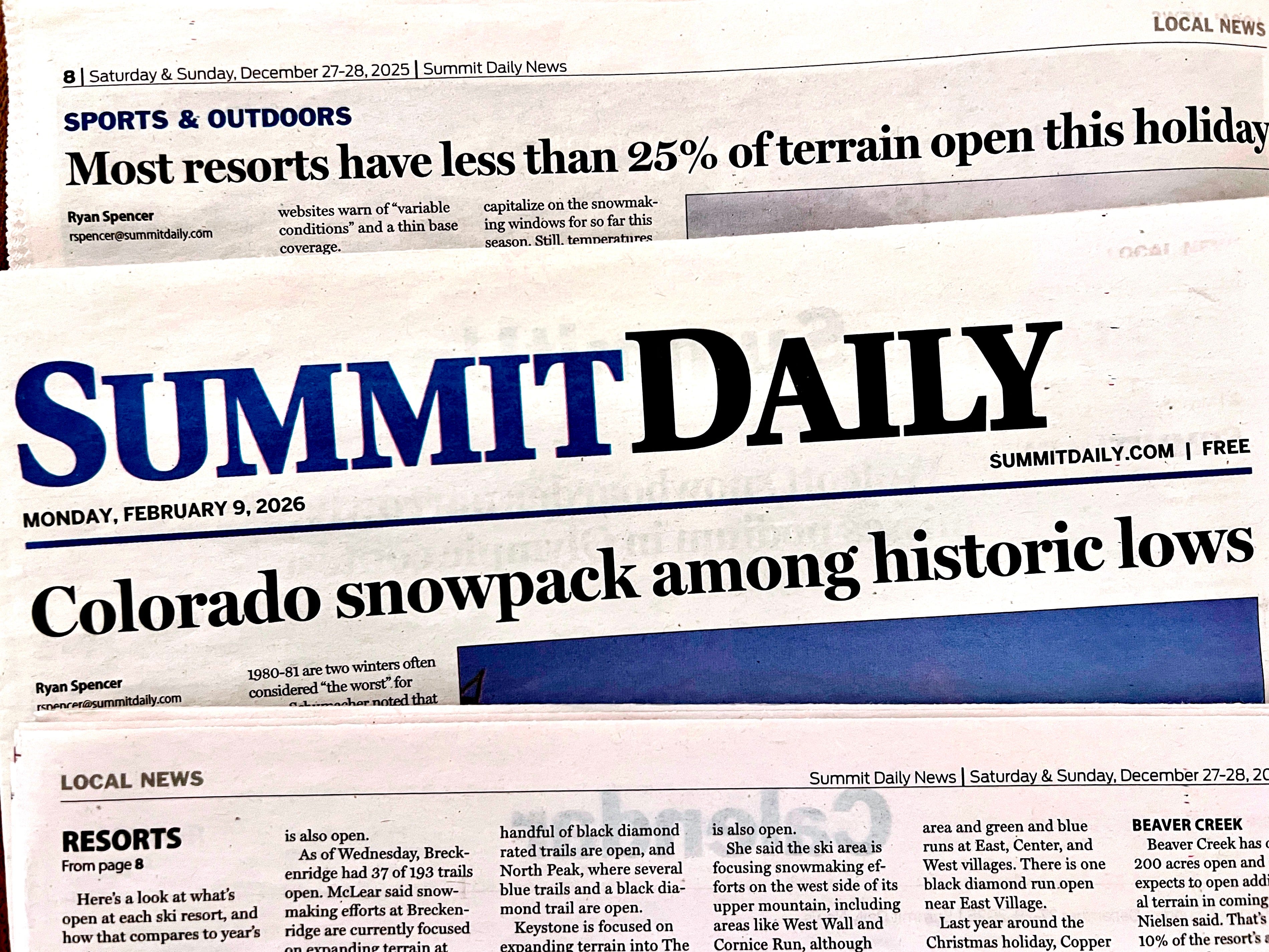
Our local paper is the Summit Daily News and they do a very good job of covering the issues, including the influence of climate change in the mountains, especially to the snowpack and freshwater supply.
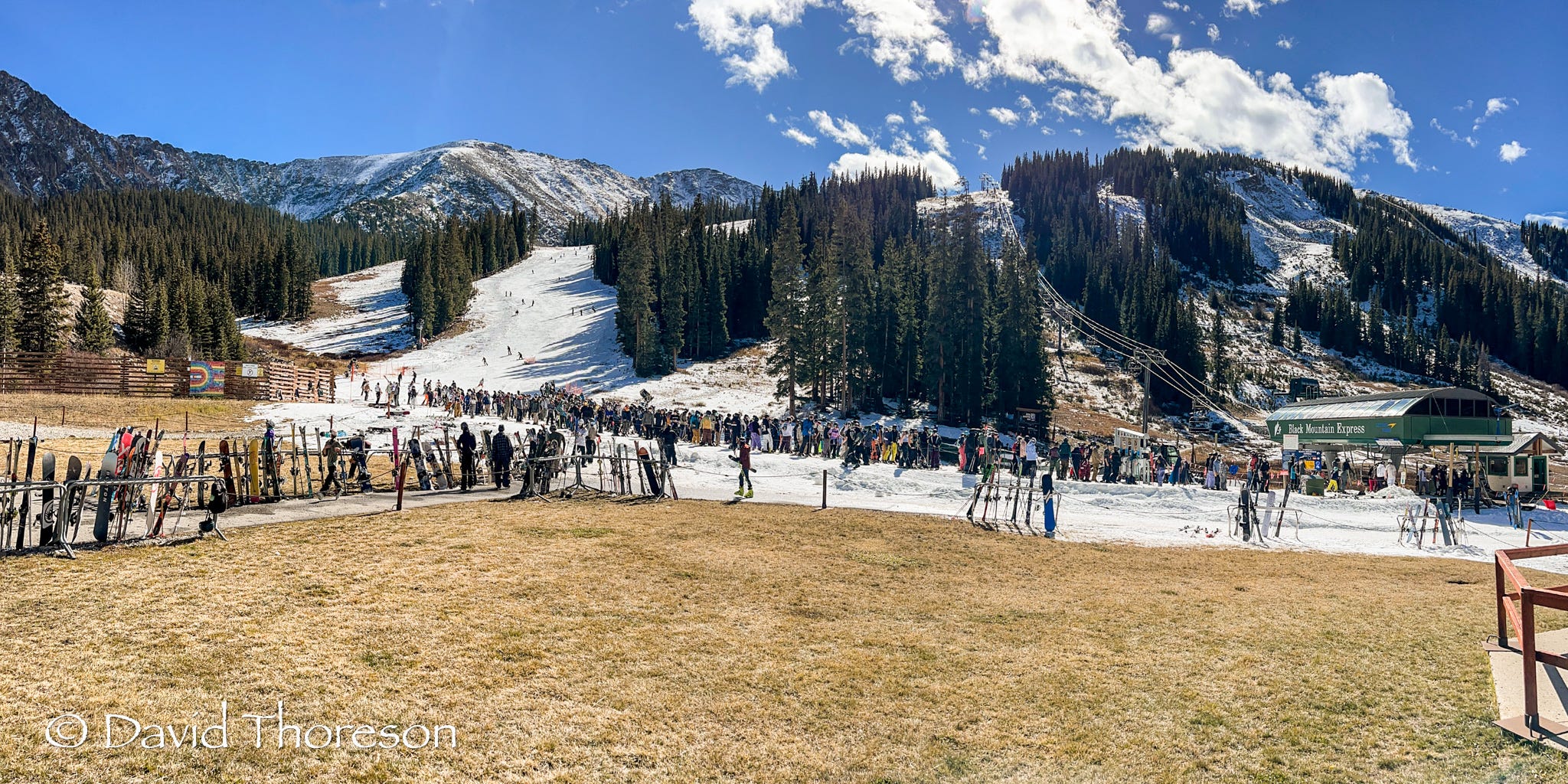
I have done a lot of speaking in mountain communities about the issue of climate change and how it will affect the region. I have also attended numerous public forums and lectures by scientists and advocates discussing the future of snow sports. To a person, everyone has said that the higher elevation ski areas of Summit County will be the least and last affected by climate warming.
This turned out to be the first season that everyone witnessed their new altered future. Even at the highest elevations in the Rocky Mountains, there is no escape from the climate crisis. It is here, it is now and it is real.
I monitored the first full day of spring as the western heat moved into the Midwest sending temperatures into the 70’s and 80’s in Northwest Iowa. The previous week a blizzard had raged sending snow and windchills down to -25 F refreezing lakes and ponds wreaking havoc in the region. Talk about weather whiplash. These strong systems produced over a 100 degree difference in temperatures.
In western Nebraska, the lack of snow cover combined with record temperatures, high winds and low humidities to produce Red Flag Warnings across the state. Fires broke out and quickly spread out of control growing to the largest wildfires ever recorded in the state. Over 900,000 acres burned, an area larger than the state of Rhode Island.
Fire officials in the state said this was becoming the “new normal.” Benjamin Bohall, Nebraska Forest Service PIO (Public Information Officer) shared, “We see the writing on the wall in terms of these springs becoming hotter, not getting enough moisture.”
Bohall continued, “The problem is we’re just not getting enough snow during the winter, and then we have these unseasonably warm days that happen, with high winds, low relative humidity. That becomes a recipe for a wildfire," Bohall documented. "For the past four years, that’s just been the case.”
Red States, Blues States, all states, better get used to it. Climate disruption is here.
This past week Iowa truckers and farmers sent a “caravan of kindness” to the ailing ranchers in western Nebraska. The eleven semi-trailers were loaded with hay to provide some hope and relief in this new world with an altered climate. It will take an infinite number of these acts, an “all hands on deck” approach, to lift each other through these extreme events.
Meanwhile in the mountain west, the weak snowpack is melting off quickly sending runoff into awaiting rivers and reservoirs. Cities like Denver have already created water restrictions for the spring season, never mind the summer. Denver, along with hundreds of other cities and communities throughout the west are bracing for the long haul with less water.
All the states within the Colorado River Basin are in for arguably the most challenging year they have ever faced. The seven river-using states break between the Upper Basin (Colorado, New Mexico, Utah, Wyoming) and Lower Basin (Arizona, California, Nevada) and form what is known as the Colorado River Compact.
They are in complete meltdown and disagreement over who should bear the brunt of the mandatory water cuts they face as climate change continues to shrink the river's water supply. They have already missed their February deadline to sign the agreement. If they fail to sign an agreement, Interior Secretary Doug Burgum will impose one on October 1 this autumn. What could possibly go wrong?
With this potential environmental disaster looming, to the south and west, far out in the Pacific Ocean, a potential Super El Nino is forming. There is no saying what will happen but we do know the weather events will be extreme.
Buckle up and put on your helmets folks. It is going to be a rough ride. Until the majority of voters get a grasp on the current climate reality and the harm we are doing to our fragile environment, the earth will keep spinning us into a more uncertain future.
Have you explored the variety of writers in the Iowa Writers’ Collaborative? We are writers and creators from around the state and contribute commentary and feature stories of interest to those who care about Iowa, and as you witness here, well beyond. Please consider a paid subscription.
Hoax. Fake news. Radical leftist propaganda. Drill baby drill. These are the messages coming from the administration and their partners in propaganda; most of every major media outlet in America.🇺🇸
Thanks, for the reminder and straightforward truth about the coming cataclysm awaiting everyone, David.
Meanwhile in Europe an increasingly number of countries are becoming non fossil fuel dependent. Coalition of wind, solar, battery is leading the way to independence from gas, oil, and nukes. When will we ever learn?